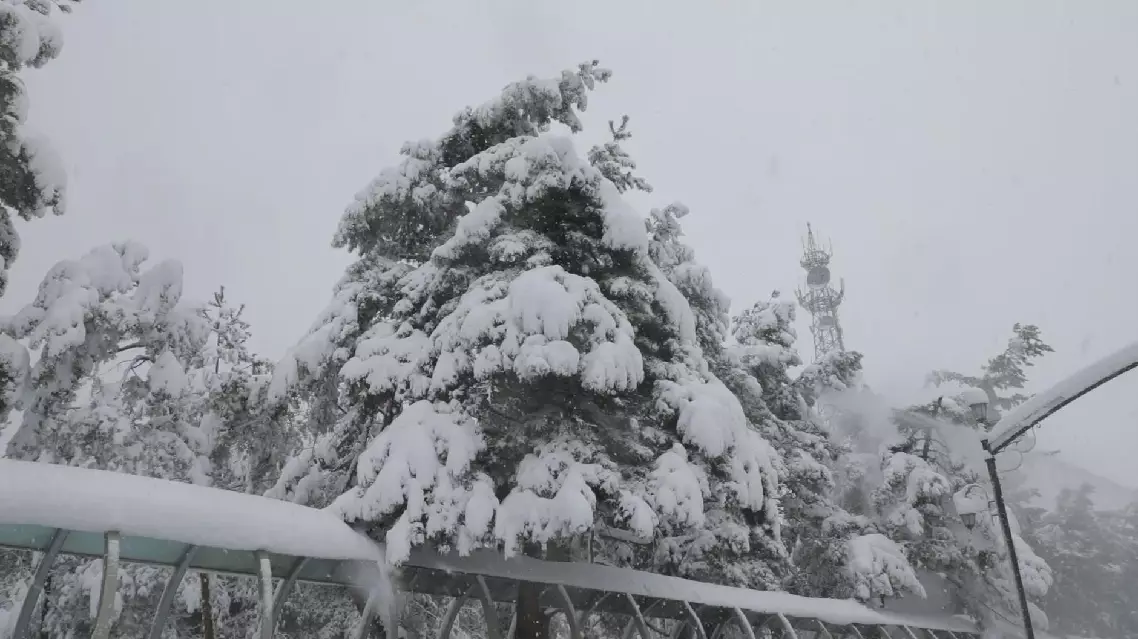
Heavy snow has gripped many parts of northeast China, prompting local authorities to take emergency response measures to ensure public safety.
An unexpected snow battered the Changbai Mountain Protection and Development Zone, a world-class tourism destination with rich natural resources, in northeast China's Jilin Province on Sunday.
The Changbai Mountain Scenic Area was closed and guided tourists to neighboring sites not hit by the snow.
Local authorities already issued warnings and carried out inspections to identify and eliminate potential hazards in advance.
Personnel and vehicles were swiftly dispatched to clear snow on the roads to restore the normal traffic. All passenger transport operations that should be halted were suspended as part of emergency response measures.
Local traffic police made up plans to ease congestion and ensure smooth traffic on road sections prone to accidents, striving to rescue stranded individuals and vehicles.
Meanwhile, many places in Liaoning Province also experienced snow from Friday to Sunday, with average precipitation exceeding 30 millimeters, according to the local meteorological department.
In Shenyang, the provincial capital, the melted snow made roads wet and caused water logging in some areas.
In response, the local authorities have taken measures to minimize the impacts of snow. The meteorological department said it would continue to monitor changes of weather and warned the public to take precautions when traveling.
Heavy snow hits Jilin, Liaoning
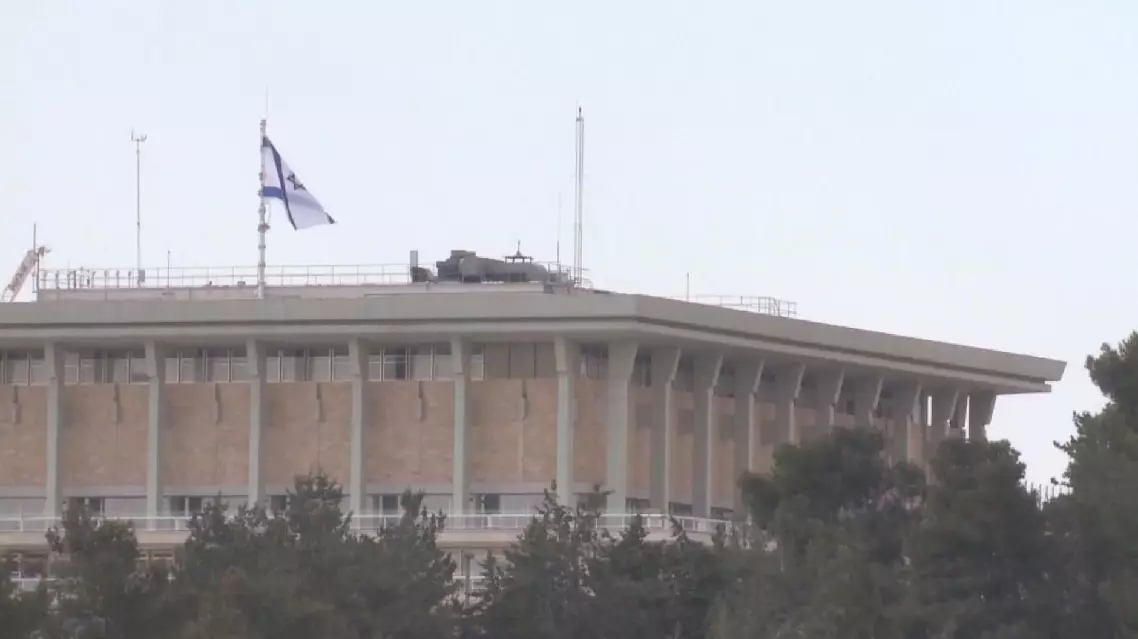
The recently signed memorandum of understanding (MoU) between the United States and Iran has sparked major concern among Israeli officials, who fear that Israel's interests are being abandoned by its most crucial ally, according to analysts.
The development comes as Israel braces for a pivotal election later this year, with Prime Minister Benjamin Netanyahu potentially facing severe political fallout from the agreement.
"Israel views the MoU signed with Iran as a complete capitulation where the Americans were desperate to reach a deal because they clearly failed abysmally to plan for the blocking of the Strait of Hormuz. So they feel that all of Israel's interests have been abandoned," said Dan Perry, an American world affairs and political analyst.
Following the signing of the MoU, Iran and the United States held the first round of high-stakes indirect talks, mediated by Pakistan and Qatar, at the Swiss mountain resort of Buergenstock on Sunday.
On Monday, mediators announced encouraging outcomes from the talks, including a 60-day roadmap toward a final deal, and mechanisms to ensure the security of commercial shipping through the Strait of Hormuz and to end the fighting between Israel and Hezbollah, a close ally of Iran in Lebanon.
However, there have been concerns that Israel may jeopardize the negotiations.
"No doubt that the Americans, some of the Americans, definitely some of the Americans that are negotiating, like the Vice President JD Vance, think that Israel can put some obstacles and jeopardize the negotiations," said Yaki Dayan, former Israeli consul in Los Angeles.
With Israeli elections looming later this year, Netanyahu's core strategy to get re-elected was to portray the very good relations he holds with U.S. President Donald Trump. However, the MoU and the ensuing negotiations between the U.S. and Iran may dramatically affect the election results.
"Unless something dramatically changes, this is devastating for Netanyahu, not only because he pursued a strategy that has failed - the Iranian regime still stands, the nuclear program still exists, Hamas and Hezbollah are still fighting against Israel, but also because he was long perceived as Mr. America, with his incredible eloquence in American English. He could run circles around any American president to get America to do Israel's bidding," said Perry.
Perry added that instead of maintaining that influence, Netanyahu has brought Israel to an unbelievably low point in its relationship with the United States.
Although Netanyahu did practically everything to persuade the U.S. to withdraw from the previous Iran nuclear deal signed more than a decade ago under President Barack Obama, analysts doubt that he can repeat it again this time because Israel and its prime minister rely entirely on just one side of the American political spectrum.
"When you look at alternatives now, you don't have because Israel has lost the Democratic side as well. So you don't have an alternative in the American politics," said Dayan.
Israel feels its interests "abandoned" in US-Iran deal: analysts